What Is Business Intelligence and Why It’s Essential for Small Businesses
If someone asked you what Business Intelligence is, you’d be forgiven for not knowing how to answer.
Most small business owners hear the term and assume it means complicated software, big companies, or people staring at dashboards all day. Something technical. Something expensive. Something “not for them”.
In reality, Business Intelligence is much simpler than that.
At its most basic level, it is about understanding what is actually going on in your business, using the information you already have, in whatever form that exists.
And when it works properly, it usually does one of two things:
It either saves you money, or helps you make more of it.
Often, it does both.
What Business Intelligence really means (in plain English)
Business Intelligence is not a tool.
It is not software.
It is not a dashboard.
It is the process of taking everyday business information and turning it into something you can actually use to make decisions.
That information might be:
-
a notebook where you write down what you sold
-
invoices saved in a folder
-
bank statements
-
booking emails
-
hours written on scraps of paper
-
spreadsheets that only you understand
All of that counts as data.
Business Intelligence simply helps you:
-
organise it
-
make sense of it
-
spot patterns
-
and use it to decide what to do next
You do not need to be technical. You just need the information in a form you can trust and understand.
Why most small businesses struggle without realising
A lot of small businesses run on memory, instinct, and experience. That is not a bad thing. It is often how businesses get off the ground.
But as things get busier, small issues creep in:
-
numbers written in different places
-
totals that do not quite match
-
time spent rebuilding the same figures
-
decisions delayed because you are “not quite sure”
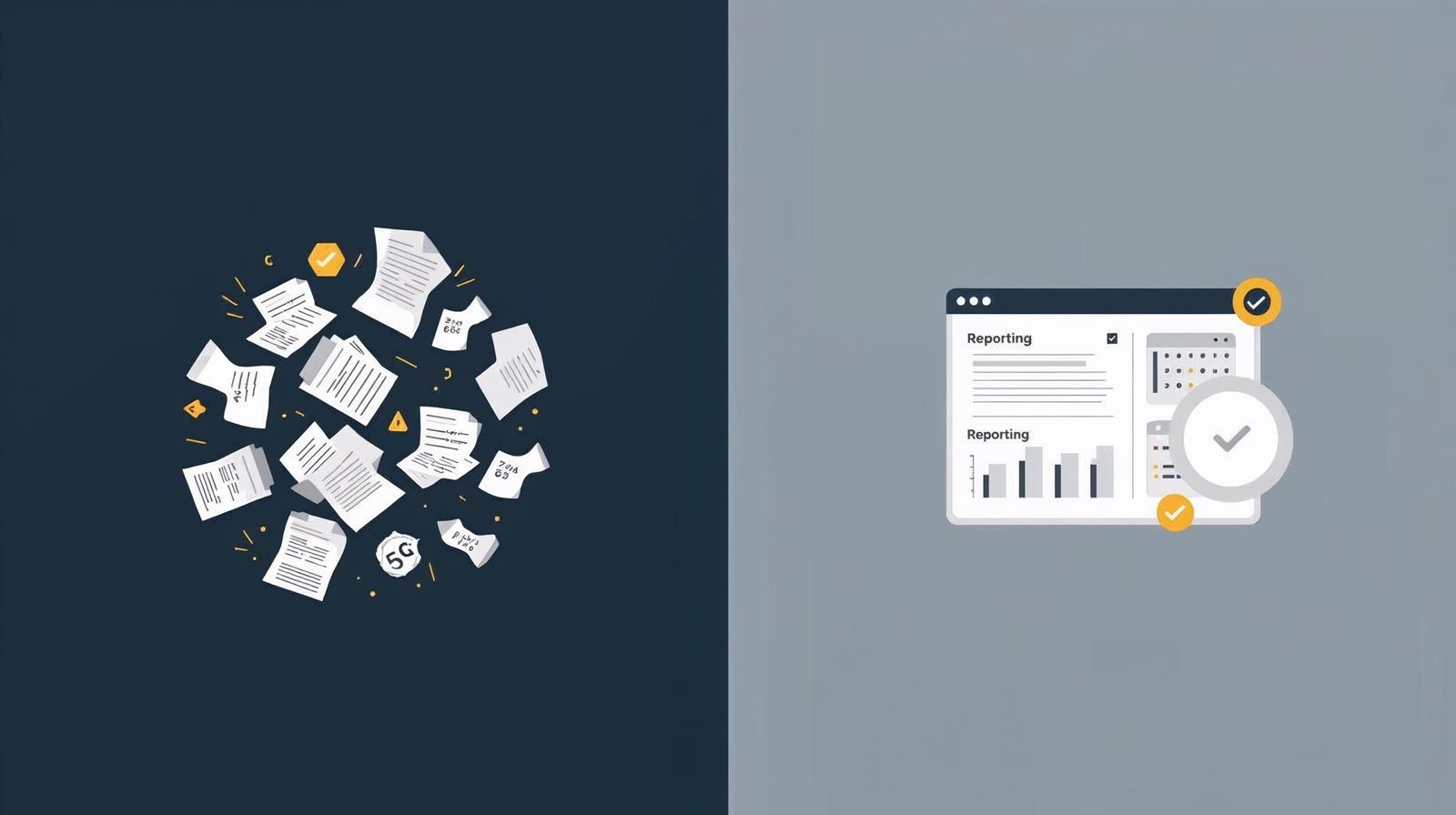
If you recognise the pattern of mismatched numbers, multiple spreadsheets and manual updates, these are the most common reporting mistakes behind it (and how to fix them).
Nothing breaks dramatically.
It just gets harder to stay on top of things.
This is usually the point where people feel stressed, even if the business is doing okay.
Better use of information helps remove that pressure.
How Business Intelligence saves money
One of the quickest benefits of better reporting is reducing waste.
When your information is organised and easy to review, you can:
-
see where money is going that does not need to
-
notice jobs or services that take longer than expected
-
reduce time spent repeating the same admin
-
catch mistakes before they become expensive
For example, if you are spending hours each week adding up numbers from different places, that time has a cost. Even if you are not paying someone else to do it, you are paying with your own time.
Small improvements here often save more money than people expect.
How Business Intelligence helps you make more money
Better information does not just cut costs. It also supports growth.
When you understand your numbers better, you can:
-
focus on the work that actually pays well
-
see which customers are worth prioritising
-
notice patterns in sales and demand
-
price work with more confidence
-
plan ahead instead of constantly reacting
This is where information stops feeling like admin and starts feeling useful.
What if you do not even have ‘reporting’?
This is more common than people admit.
Many small businesses do not have reports at all. They might have:
-
a notebook
-
bank statements
-
emails
-
invoices
-
a rough idea in their head
That is still a starting point.
Reporting does not have to mean charts or spreadsheets. At the beginning, it might simply mean:
-
writing things down consistently
-
keeping everything in one place
-
reviewing it regularly
If you are at that stage, this guide explains how to start without overthinking it: https://grifflepop.com/what-should-a-small-business-track/
What about dashboards?
Dashboards are just one way of looking at information.
They are useful when:
-
the right things are being tracked
-
the numbers are reliable
-
and someone actually looks at them
They are not a requirement, and they are not always the answer.
If you are unsure whether dashboards would genuinely help or just add another thing to maintain, this article walks through the signs: https://grifflepop.com/need-a-dashboard/
Why businesses get help with this
Most small businesses already have information.
What they often lack is:
-
time to sort it properly
-
confidence they are doing it right
-
someone to sense check their approach
Trying to figure it out alone often leads to:
-
overcomplicated spreadsheets
-
half-finished systems
-
numbers no one fully trusts
-
frustration and wasted effort
Getting help means:
-
avoiding common mistakes
-
keeping things simple
-
building something that actually fits the business
-
saving time and money sooner
That is why Business Intelligence support becomes an investment rather than an expense.
You can see the kinds of support I offer here: https://grifflepop.com/services/
Business Intelligence in everyday terms
If you strip away the buzzwords, Business Intelligence helps you answer questions like:
-
Am I actually making money on this work?
-
Where does most of my time go?
-
What is costing more than it should?
-
What should I focus on next?
If you want a simple starting set of numbers that help answer those questions, these ten KPIs are a good baseline for most SMEs.
Being able to answer those questions makes running a business feel less stressful and more controlled.
If you want a very gentle introduction to using information in your business without jargon, this article may also help: https://grifflepop.com/business-data-basics/
Final thought
Business Intelligence is not about turning your business into a data project.
It is about making it easier to run.
If better information helps you:
-
save time
-
waste less money
-
feel more confident about decisions
then it is already doing its job.
External reference
For general guidance on understanding business performance and planning, the UK government provides a useful overview here: https://www.gov.uk/business-planning
Discover more from GrifflePop Analytics
Subscribe to get the latest posts sent to your email.





7 Responses